
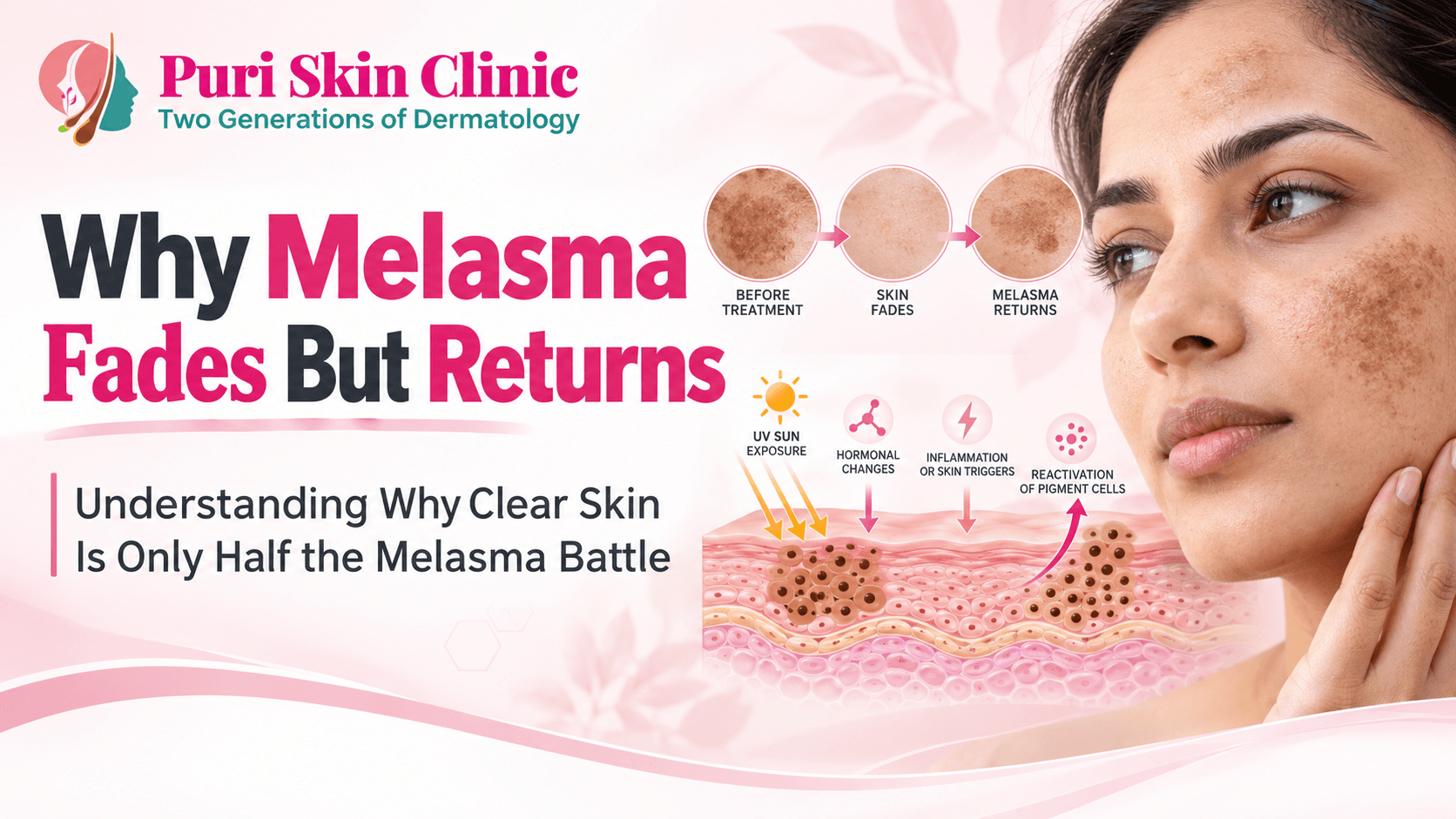
Melasma is not only a skin problem that can disappear completely after a single treatment, but it is also a chronic pigmentation disorder that appears on the face, mostly on the cheeks, forehead and upper lip. If you notice fading patches after a treatment, it does not mean that the problem is over.
It is a long-term condition where some skin cells produce excess pigment; treatment can lighten the melasma but not cure it. Melasma recurrence maintenance is not a sign of failure; it means melasma needs steady, layered care rather than a one-time fix treatment. Once you understand the melasma recurrence maintenance guide, you can make a plan that can actually hold melasma.
Pigmentation is most common in women between the ages of 20 and 40 and in skin that can tan easily, and melasma is not only a surface problem. With the help of a microscope, pigments can be seen in deeper layers, and the symptoms of long-term sun damage can support these issues. In this blog, you will get to know the answers to melasma recurrence maintenance questions, such as why melasma tends to come back. Which factors can trigger this process, and how can protection and follow-ups be helpful after treatments?
- Sun and heat reactive
UV light is the biggest trigger of melasma, but UV rays are not the only one; visible light, including sunlight and the glow from screens, also supports pigment production in melasma-prone skin.
- Antiseizure Medication
Medicines that you use to manage seizures may be the cause of melasma, and antiseizure medications such as clobazam can increase melasma.
- Contraceptive Therapy
Melasma can be observed in individuals who may use oral contraceptive pills that contain estrogen and progesterone.
- Heat
Many people observe flares after saunas, hot yoga or long runs in summer; people who stand over the stove for a long time also notice flares. Heat is a commonly reported trigger; it is easily ignored by people because it can affect your skin even without causing sunburn.
- Hormones
Nearly a quarter of cases of melasma are linked to contraceptive therapies and pregnancy. If the hormonal impact continues, then the body will keep reacting to it; it is important to consult your doctor before changing any medicine or treatment.
- Genetics: If someone in your family has it, then there are more chances you will get melasma; about 33% to 50% of people reported that someone in the family has it.
- Skin Care products: Skin care products that can irritate your skin in general can make your melasma worse.
Signs of Melasma
Melasma can cause light brown, dark brown or bluish patches on your skin, and sometimes these patches become red or inflamed. Melasma can appear in six different locations, including:-
- When melasma appears on your shoulder or upper arm, it is called brachial.
- Centrofacial, when melasma appears on your forehead, nose and upper lip.
- Lateral cheek pattern appears on both cheeks
- When melasma appears on both cheeks and the nose, it is called malar.
- When melasma appears on the jawline, it is called mandibular.
- Sometimes melasma can appear on all sides of the neck in people aged 50 or above.
You should consult your health care provider, as he can decide if you have melasma or another type of skin issue. However, to keep your skin healthy, you can try foods that are rich in vitamin D, including:
- Almond Milk
- Eggs
- Meat Milk
- Mushrooms
- Oily Fish
- Orange Juice
- Yogurt
Conclusion
Melasma is a common and harmless skin problem, but it can be bothersome sometimes if you are self-conscious about it. This skin problem can affect your social life, and some people cannot feel confident because healthy and glowing skin makes a positive impact. The other main problem of melasma is that it does not disappear completely even after so many treatments, or it appears again.
But it does not mean you have to live with it; it can be managed by adopting the right lifestyle, a healthy diet and skin protection. By taking preventive measures and consulting with a professional dermatologist, melasma recurrence maintenance guide. If you are facing this annoying skin issue or looking for a hair transplant, then book an appointment today with Puri Skin Clinic, where you can consult with Dr. Gurinderjit Singh Puri has 35 years of experience in the field of dermatology and hair transplantation, where you can get the best treatments.
FAQs
Can melasma be cured permanently?
No, melasma can be managed or faded, but in rare cases it can be cured permanently.
If I take laser treatments, will melasma get back?
Yes, without strict sun protection and maintenance, melasma often comes back even after laser treatments.
What are the best treatments for melasma?
There is no exact treatment for melasma to cure it permanently, as it comes back after treatment because melasma can be managed but not cured permanently.
Can melasma turn into skin cancer?
No, melasma is a noncancerous skin problem; it does not turn into skin cancer.
Did you find this helpful?
Share this article with your community